
Understanding Swimming Training Capacities: E1, E2, E3 & Sp1, Sp2, Sp3
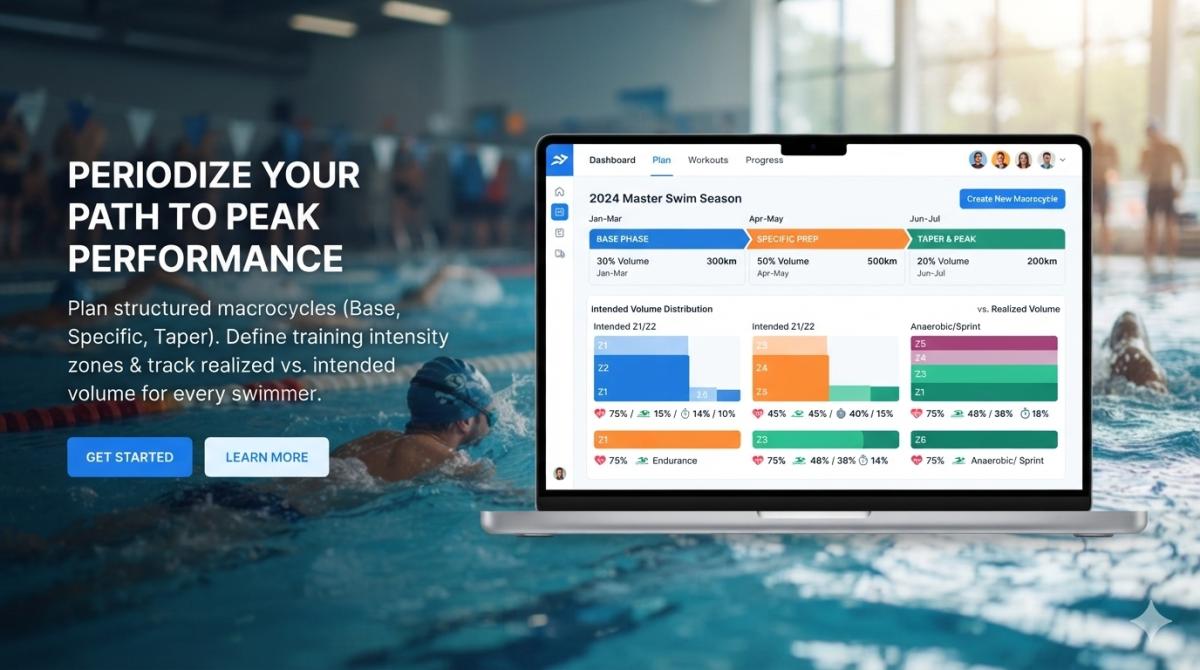
Understanding Swimming Training Capacities: E1, E2, E3 & Sp1, Sp2, Sp3
In Swimming Fastest (Human Kinetics, 2003), Maglischo organizes metabolic conditioning into three Endurance levels (En-1, En-2, En-3) and three Sprint levels (Sp-1, Sp-2, Sp-3). Each targets specific muscle fibers and energy systems—and together, E1 and E2 form the foundation of the entire season.
1. Quick Overview of All Six Capacities
| Capacity | Primary Purpose | Set & Repeats | Rest | Intensity / Speed |
|---|---|---|---|---|
| E1 (En-1)
Basic Endurance
|
Aerobic base for slow-twitch (ST) fibers; fat metabolism & recovery | 600–2,000+ m (8–15+ min); repeats ≥200 m (≥2 min) | 5–10 s (short) 10–20 s (mid) 20–60 s (long) |
2–6 s/100 slower than threshold; 1–3 mmol/L; HR 120–150 bpm (RPE 12–14) |
| E2 (En-2)
Threshold Endurance
|
Aerobic capacity of ST & FTa fibers at lactate balance | 2,000–4,000 m (20–45 min); repeats ≥200 m | 5–10 s (short) 10–20 s (mid) 20–60 s (long) |
Near anaerobic threshold; 3–5 mmol/L; HR 10–20 below max (RPE 15–16) |
| E3 (En-3)
Overload Endurance
|
Aerobic capacity of FTb fibers & buffering capacity | 1,200–2,000 m (15–20 min); repeats up to 2,000 m | 5–30 s (short) 15–60 s (mid) 30 s–2 min (long) |
2–3 s/100 faster than threshold; ≥6 mmol/L; HR max (RPE 17–20) |
| Sp1 (Sp-1)
Lactate Tolerance
|
Muscle buffering capacity & technique under acidosis | 300–1,200 m (400–800 m sprinters); 25–200 m | 3–10 min (long) 15 s–2 min (med) 5–30 s (broken) |
Faster than threshold, near race speed; severe acidosis; HR max (RPE 18–20) |
| Sp2 (Sp-2)
Lactate Production
|
Rate of anaerobic glycolysis & max sprint speed | 300–600 m per set (multiple sets); 25–50 m | 1.5–3 min (25s) 3–5 min (50s) 5–15 min/set |
Near maximum (>80–85% max): within 1–2 s of best 25, 2–3 s of best 50 |
| Sp3 (Sp-3)
Power Training
|
Muscular force, CNS recruitment & rate of force development | 50–300 m (4–10 reps, 3–6 sets); 10–12.5 m (4–8 cycles) | 45 s–2 min/rep 3–10 min easy/set |
Maximum velocity & 50-race stroke rate (~4–6 s, ATP-CP); keep stroke length |
Basic Endurance (En-1)
Continuous or short-rest swimming at moderate speed—above the aerobic threshold and comfortably below the anaerobic threshold. Targets slow-twitch (ST) and low-threshold FTa fibers to build cardiovascular oxygen delivery, fat utilization, and lactate clearance without acidosis.
Threshold Endurance (En-2)
Long sets swum near the individual anaerobic threshold, where lactic acid production and removal stay in balance. Recruits FTa fibers alongside ST fibers, maximizing aerobic enzymes, capillaries, and mitochondria without severe muscle pH drop.
Overload Endurance (En-3)
High-intensity endurance sets swum faster than threshold (2–3 s/100 faster). Because FTb fibers are not recruited until speeds exceed threshold, E3 is needed to train FTb aerobic capacity, lactate removal, and buffering. Requires 1.5–3 days recovery (1–2 major sets/week).
Lactate Tolerance (Sp-1)
Anaerobic sprint sets that drive muscle pH into severe acidosis so working fibers store more buffers and swimmers maintain stroke mechanics under fatigue. Done via long sprints/long rest, medium-rest sprints, or broken swims. Emphasized 4–6 weeks pre-taper for sprinters (2–3 days recovery).
Lactate Production (Sp-2)
All-out 25s and 50s (9–30 s) with long rest (1.5–5 min) so lactate clears and creatine phosphate (CP) restores between repeats. Accelerates anaerobic glycolysis and raises top sprint speed—giving distance swimmers "easy speed"—without acidosis shifting the effect to Sp1. Used all season.
Power Training (Sp-3)
Ultrashort, maximum-effort sprints of 10–12.5 m (4–8 stroke cycles, ~4–6 s) fueled by stored ATP-CP before glycolysis dominates. With 45 s–2 min rest, swimmers apply more force at faster stroke rates than in races, bridging dryland strength to water speed throughout the season.
2. Why E1 and E2 Are So Important
Maglischo states directly that increased aerobic endurance contributes more to improved swimming performance in all events of 100 yards/meters and longer than any other physiological adaptation, and that the anaerobic threshold remains the pivotal concept around which training is planned. Together, E1 and E2 build the indispensable aerobic engine upon which all faster training depends.
Why E1 (Basic Endurance) Is Essential
- Oxygen delivery & slow-twitch system: Increases stroke volume, cardiac output, blood volume, and pulmonary capillaries, plus capillaries, myoglobin, and mitochondria in ST fibers.
- Spares glycogen via fat metabolism: Fat supplies 50%–75% of energy during E1; consistent endurance training nearly doubles fat use and cuts glycogen depletion by ~42% at submaximal speeds.
- Enables recovery & glycogen replenishment: Because ST fibers do most of the work, fast-twitch fibers get time to restock glycogen spent in E2, E3, and sprint sets.
- Protects adaptations intense work can erode: ST capillarization, mitochondria, and stroke volume respond best to slow-to-moderate speeds and can deteriorate if you train above threshold too often.
- Builds the early-season base: Makes up 60%–70% of volume in the first 8–12 weeks (50%–60% later), preparing the body for heavier workloads.
Why E2 (Threshold Endurance) Is Essential
- Trains fast-twitch (FTa) fibers aerobically: E1 alone leaves FTa fibers under-stimulated. Swimming near threshold recruits FTa fibers, increasing their capillaries, myoglobin, mitochondria, VO2max utilization, and lactate removal.
- Maximum aerobic stress without acidosis damage: With lactate production and removal balanced (3–5 mmol/L), swimmers can sustain 20–45 minutes (2,000–4,000 m) of high-level aerobic work without severe muscle pH drop or tissue breakdown.
- Directly raises sustainable race pace: Raising threshold speed lets swimmers race faster while staying aerobic longer, delaying fatiguing acidosis in 100 m, 200 m, and distance events.
Why E1 and E2 Need Each Other
A single 1,500+ m E2 set depletes 50%–70% of muscle glycogen (especially in FTa fibers) and requires 24–48 hours to replenish. Attempting E2 or E3 daily without E1 recovery days leads to glycogen depletion, muscle protein breakdown, suppressed endocrine/immune function, and overtraining. Conversely, doing only E1 leaves FTa fibers aerobically underdeveloped.
Key Coaching Rules from Maglischo
- Swim your competition stroke(s): Peripheral adaptations (capillaries, mitochondria, myoglobin, lactate transporters) occur only in the specific muscle fibers used in training.
- Do not race teammates in E1 or E2: Racing turns E1/E2 into E3, causing premature acidosis, cutting aerobic volume, and limiting late-season potential in middle-distance and distance events.
- Progress volume before speed: Increase E2 speed only when test sets, lower heart rates, or lower perceived exertion show the swimmer's threshold has actually improved.
Generate Your Full Season Plan With Just One Click
Apply Maglischo's E1, E2, E3, Sp1, Sp2, and Sp3 guidelines automatically—build a complete, periodized swimming season plan in seconds.